
RISBAT was presented during the latest EUCOBAT meeting in Brussels, April 16, by our coordinator, Sofia Chuma (Re-Battery).

RISBAT was presented at the EUCOBAT Conference on 16 April 2026 in Brussels by the project coordinator, Sofia Chouma (Re-Battery). EUCOBAT is the European association of national battery collection schemes, working to ensure that waste batteries are collected and recycled in an environmentally sound and responsible manner. The conference brought together representatives from 27 Extended Producer Responsibility (EPR) schemes across 21 countries, along with representatives from the European Commission, Haiki Cobat, FEAD, Umicore, and the International Metals Study Groups. Participants discussed key issues in battery waste management, including safety risks, fire prevention, and the
operational implications of the new regulatory framework. This meeting offered a valuable opportunity for RISBAT to share its approach and contribute to the wider European conversation on the future of battery collection, treatment, and recycling.
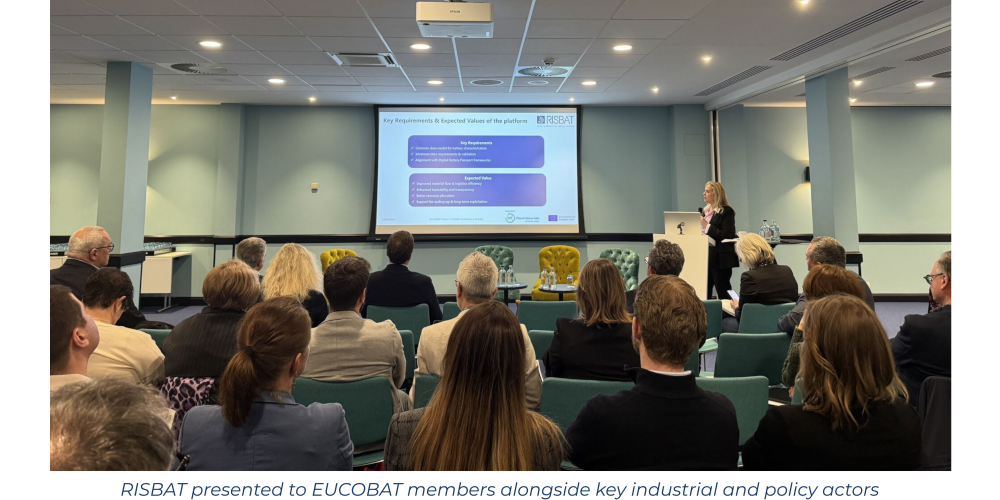
Addressing the growing challenge of lithium-ion battery waste
During her presentation, Sofia highlighted the rapid increase in lithium-ion batteries entering the European market, driven by electric vehicles, light mobility technologies, and consumer electronics. As a result, Europe is experiencing a
sharp rise in end-of-life batteries, accompanied by significant safety risks during collection, storage, and transport. The presentation emphasised that safe and harmonised solutions are urgently needed, particularly in the early stages of the battery waste management chain.
How RISBAT responds to emerging regulatory and operational needs
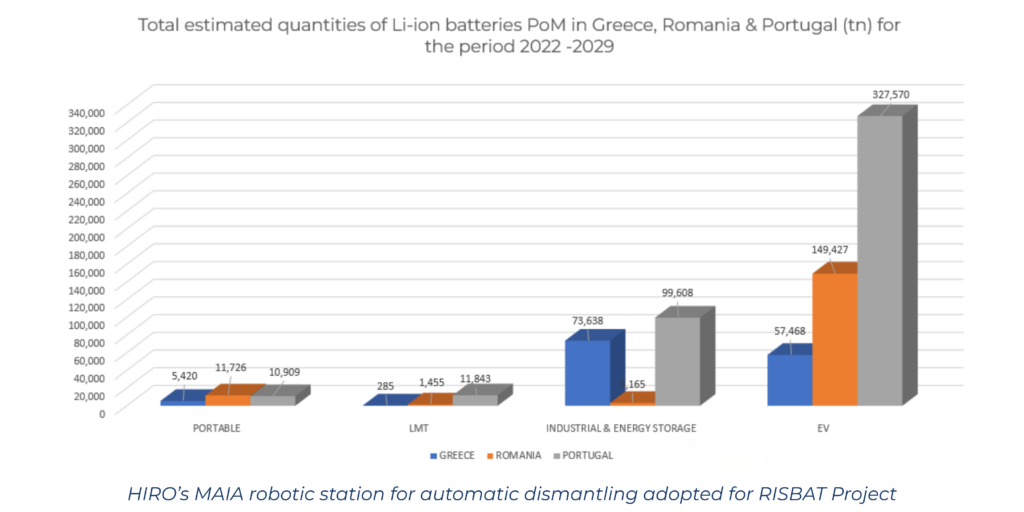
The conference focused on strengthening battery collection and management systems in line with the EU Batteries Regulation (EU) 2023/1542. RISBAT directly contributes to this objective by developing practical approaches for safer handling, pre-treatment, and assessment of lithium-ion batteries before they reach recycling facilities. Based on extensive mapping in Greece, Portugal, and Romania, the project has identified several structural and operational gaps, including long storage times for damaged batteries, limited availability of certified packaging, and varying levels of preparedness for the new regulatory requirements. A central message of the presentation was that RISBAT focuses on the pre-recycling phase, which remains one of the weakest and least standardised parts of the battery value chain.
A transferable model designed by PROs for PROs
RISBAT is built around the needs of Producer Responsibility Organisations (PROs). By working with three different national systems with varying levels of infrastructure and market maturity, the project is developing a modular and adaptable framework that can be transferred to other countries. The approach is not a one-size-fits-all solution. Instead, it is designed to be scalable and adjustable depending on national conditions, regulatory environments, and available infrastructure.