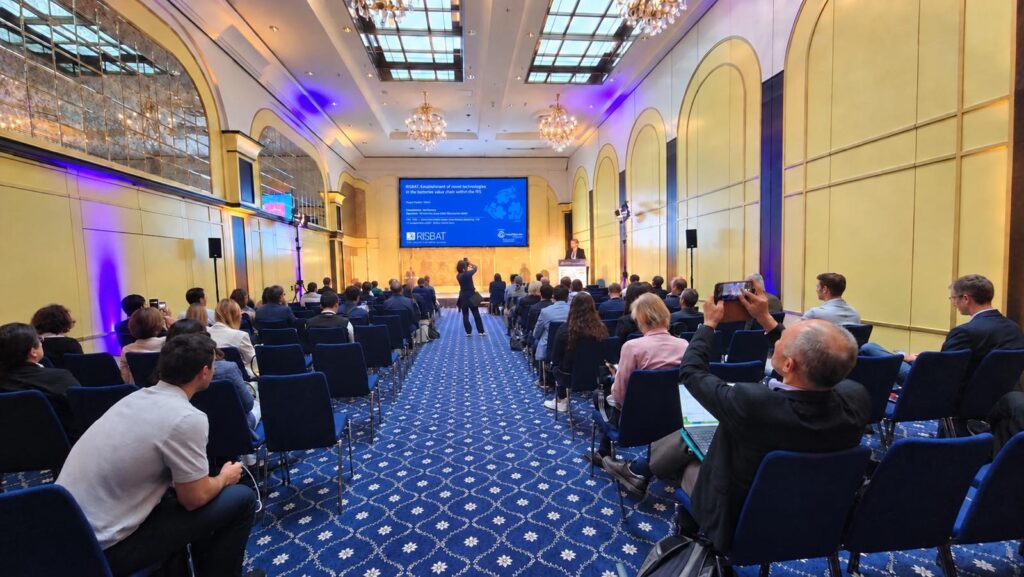
ICBR 2026 provided a platform for meaningful engagement and dialogue with economic actors across the battery recycling value chain. The RISBAT presentation offered a unique opportunity to share key findings with a highly specialised international audience and gather direct feedback from organisations and professionals facing, in practice, the very challenges that RISBAT seeks to address.
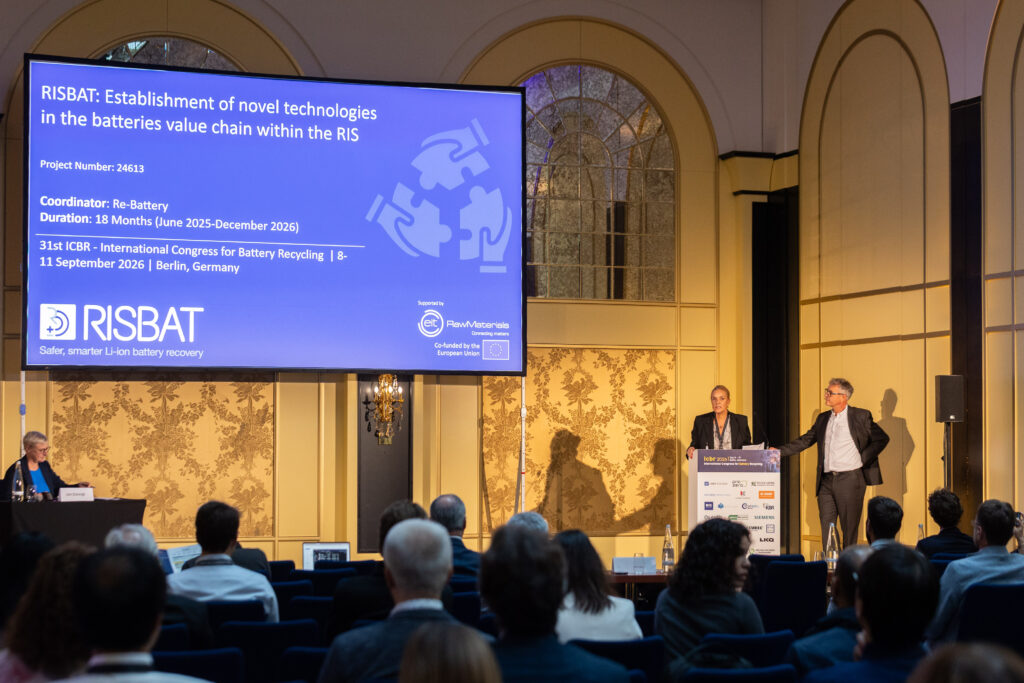
Representing the project, Sofia Chouma (Re-Battery, Greece), RISBAT Project Coordinator, and Daniël Chéret (CEO of SORTBAT, Belgium) shared the project’s key findings and results with an audience of battery recycling professionals, policymakers, Producer Responsibility Organisations (PROs) and economic operators across the battery recycling value chain. Among the attendees was Rana Pant, Policy Officer at the European Commission, who is actively involved in discussions concerning the implementation of the EU Battery Regulation and the practical challenges faced by European EPR schemes.
The transition towards a circular battery economy begins long before recycling
A key message emerging from both the presentation and the subsequent discussions was that Europe requires not only recycling capacity, but also safe, harmonised and scalable pre-treatment capacity. Before critical raw materials can be recovered, batteries must be safely collected, identified, classified, transported, stored, assessed and prepared for their next step. Decisions taken at this stage determine whether value is created or lost. Determining whether a battery should be routed for repurposing or recycling has a significant impact on safety, environmental performance and resource efficiency. Second-life potential requires reliable state-of-health, safety and performance data, appropriate testing and specialised expertise. These assessments are essential to avoid prematurely recycling batteries that retain functional value, while ensuring that batteries unsuitable for further use are safely prepared for material recovery.
RISBAT creates value before recycling
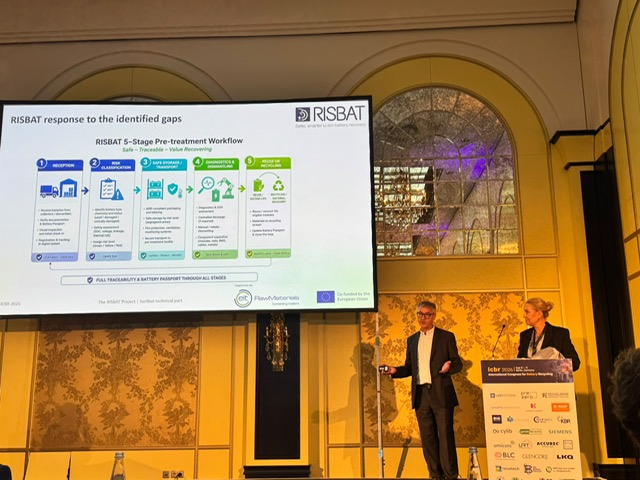
RISBAT addresses the critical stage between a battery’s first use and final recycling by combining safe collection and transport, risk classification, digital sorting and traceability, battery diagnostics, dismantling and second-life assessment within an integrated pre-treatment framework. This enables informed decision-making through the evaluation of each battery to determine the most appropriate pathway: reuse, repurposing or recycling.
Active discussions confirmed RISBAT’s relevance and the need for practical, scalable solutions upstream of battery recycling
The presentation was followed by numerous questions and highly active discussions on practical experiences regarding the implementation of the new EU Battery Regulation (EU) 2023/1542, and the operational difficulties associated with battery classification, storage and transport. Interaction with representatives from EPR schemes from countries which currently lack pre-treatment and recycling infrastructure confirmed both the shared challenges and the need for practical, scalable solutions.
The significant interest shown from operators involved in the collection, transport, storage, pre-treatment and recycling of batteries reinforced the relevance of RISBAT’s activities and key findings. The presentation highlighted a structural gap that several European markets face: Producer Responsibility Organisations carry significant legal responsibilities for managing end-of-life batteries, but do not always have access to the technical infrastructure required to fulfil them.
Limited local pre-treatment capacity, insufficient specialised training, prolonged storage of damaged batteries, costly ADR-compliant packaging and complex cross-border transport can make the safe management of lithium-ion battery waste particularly demanding. RISBAT responds to these gaps by providing a structured framework that can be adapted to different national infrastructures and operational realities addressing safe collection and handling, risk classification of used/damaged/critically damaged batteries, specialised storage and ADR-compliant transport, pre-treatment capacity, diagnostics, dismantling, second-life assessment and preparation for recycling.
From project results to operational precycling capacity
RISBAT goes beyond the development of protocols and technical solutions. Its ambition is to translate these results into real pre-treatment and precycling capacity in countries where such infrastructure is still emerging, building on demonstration activities in Greece (Re-Battery), Romania (SNRB Association) and Portugal (Electrão). Starting from the planned establishment of operational activities in Greece through a joint venture among RISBAT partners, as the first deployment of the model, the project provides a blueprint for similar capacity in Portugal and Romania, and across other European regions facing similar challenges.
Outreach to the broader battery recycling community
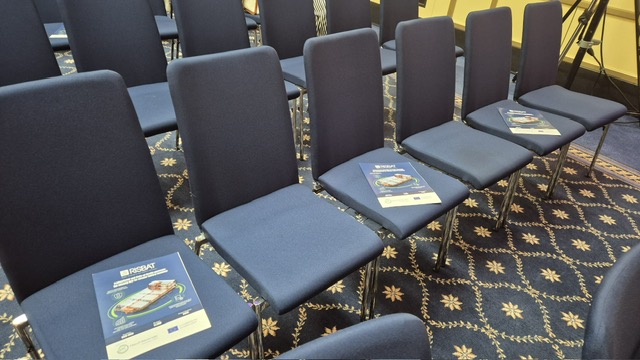
To support outreach and dissemination, the RISBAT project leaflet was distributed to participants before the presentation, while additional copies remained available throughout the congress. This ensured that project’s activities and results reached a broader international audience and contributed to strengthening RISBAT’s visibility within the global battery recycling community. As the project enters its final phase, the insights and feedback gathered during ICBR will further support the project’s mission to enable safer battery management, increase opportunities for battery reuse and second-life applications, and strengthen circular battery value chains across Europe.