
RISBAT held its 2nd workshop at SORTBAT facilities in Tienen, Belgium, on April 17, focusing on innovative pre-treatment solutions for end-of-life NMC/LFP lithium-ion batteries.
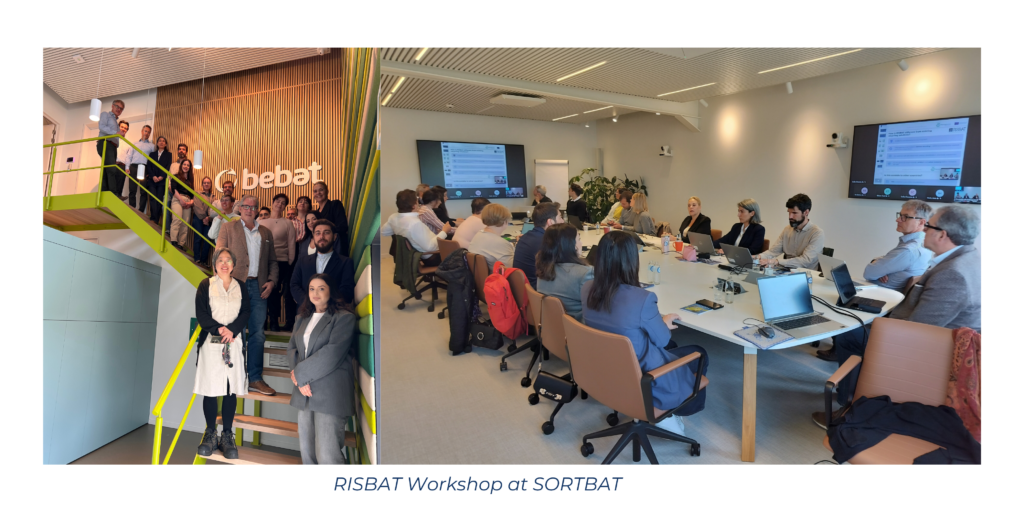
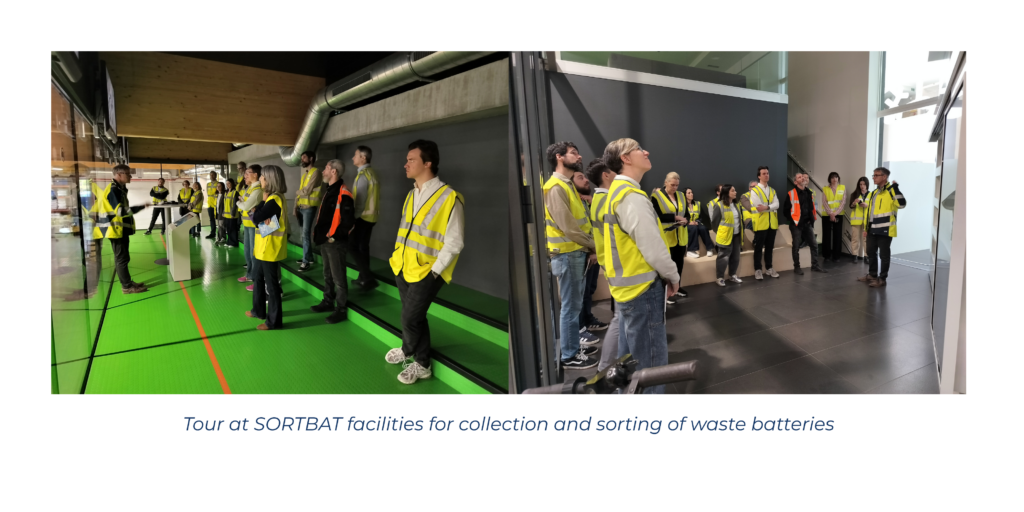
The workshop, hosted by SORTBAT, consisted of two parts: a tour at SORTBAT facilities for collection and sorting of waste batteries, and a session presenting technological developments during RISBAT on the pre-treatment of end-of-life batteries, by SORTBAT and HIRO Robotics. The technological demonstrations were shared with RISBAT’s partners — Re-Battery (Coordinator), Electrao, SNRB, and SE&C— but also with representatives from EnergyVille, a leading Belgian research centre for sustainable energy and battery technologies, and Umicore, a global materials and battery recycling company, contributing to the broader discussion on future industrial needs.
Facility tour at SORTBAT
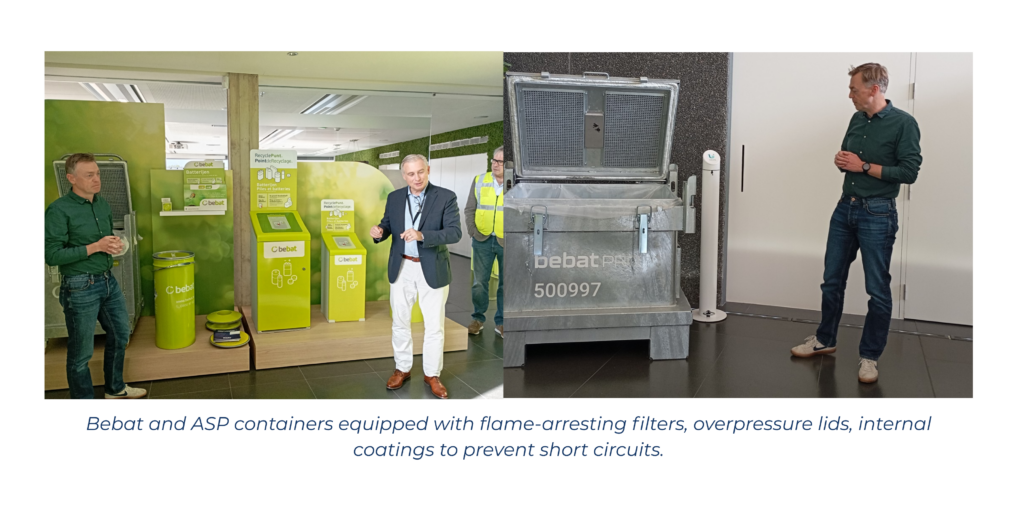
Sortbat operates one of Europe’s most advanced batteries sorting facilities, combining manual expertise with high‑precision automated technologies to ensure safe, accurate and compliant processing of end‑of‑life batteries. During the workshop the SORTBAT team presented their battery‑sorting process, which includes manual pre-sorting of large or hazardous batteries, followed by mechanical separation through a multi‑stage sieve system. Participants were shown how individual batteries and battery packs are channelled to the characterisation unit, where Sortbat’s AI‑ and X‑ray‑based system (Xbat.ai), developed with VITO, identifies battery chemistries with 99.5% accuracy. The workshop also introduced the safe storage and transport solutions used within the Bebat ecosystem, including UN‑certified metal drums and ASP containers equipped with flame‑arresting filters, overpressure lids, internal coatings to prevent short circuits, and firewater access for extinguishing without opening the container. Larger Haiki Cobat Lithium Boxes for critically damaged batteries were also presented.
RISBAT’s advancements in pre-treatment technologies
The second part of the workshop focused on technological developments within the project, including digital sorting, battery characterisation, automated disassembly of end‑of‑life batteries, and their integration. Sortbat shared the
industrial reality they face today which also marks the starting point for RISBAT: diverse Li‑ion battery streams
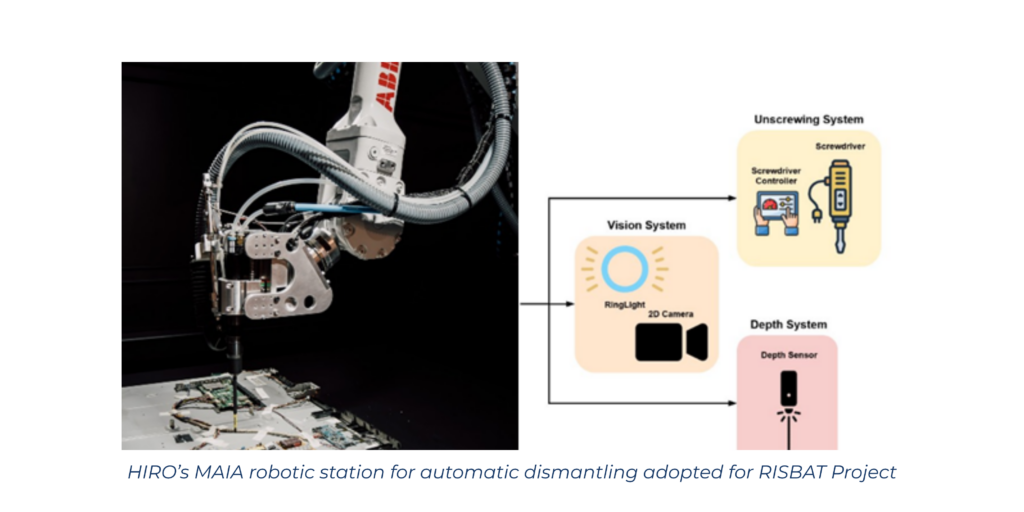
arriving with mixed chemistries, varying conditions and often incomplete documentation. Their current waste battery process chain includes the AI‑assisted X‑ray sorting, controlled discharge, and second‑life assessment, from intake to reuse/recycling decision. However, modules and packs from electric vehicles or other large industrial batteries are manually dismantled, while the unit, though completely functional, isn’t standardised or scalable. The integration of HIRO’s MAIA robotic station for automatic dismantling into the SORTBAT process is essential to address repetitive operations, safety-critical handling, and variability in battery designs.
Next, HIRO presented the advancements achieved with their MAIA robotic station, which is being adapted for the automated dismantling of Electric Vehicle battery packs. The team showcased unscrewing tests, demo videos and early solutions for cases where packs cannot yet be processed automatically. They also shared insights from analysing nine types of pre‑sorted battery packs received from Sortbat, highlighting the variability in dimensions, fasteners and materials that makes automation challenging. The integration of MAIA into Sortbat’s workflow is planned for later stages of RISBAT, and the workshop offered a first look at the technical groundwork being laid.
Sortbat also showcased how State-of-Health assessment identifies modules suitable for reuse, which can then be channelled to Watt4Ever, a Sortbat group company, specialising in second-life stationary storage systems. Their modular PowerCab units—built from repurposed EV battery modules—demonstrate how batteries can be reintegrated into applications such as peak shaving, grid support and industrial energy management. This practical link between sorting, dismantling and second‑life deployment illustrates how RISBAT’s reuse targets can be achieved in real industrial settings.
The key message emerging from both presentations is that the technological components exist and the real challenge lies in system integration and standardisation. RISBAT aims to address this by developing shared intake protocols, improving chemistry identification at entry, harmonising discharge and SoH assessment methods, and creating a structured framework for deciding between reuse, repurposing and recycling. These insights will feed directly into the upcoming demonstrations and support the project’s goal of building a transferable, industry-ready process chain.